
- Full SupportFor reservations at least a week before sailing from Lombok to Komodo boat 4 days 3 nights
- New UpdateFor trips to Komodo Island departing from Lombok Island and Labuan Bajo to Lombok using a cruise ship, things have returned to normal
- NewsFor travel to Komodo Island from Labuan Bajo has returned to normal, please secure your seat.
Komodo Pink Beach: Unpack Komodo’s Greatest Natural Mystery
2 December 2025 224x Adventure, Boat Trip Komodo, Komodo Boats Tour, Tips, Travel

Every seasoned traveler who embarks on a Komodo tour from Labuan Bajo carries with them a mental checklist of magnificent, iconic images: the dramatic, jagged spine of Padar Island, the prehistoric, intimidating gaze of the legendary Komodo dragon, and the impossible, dreamlike hue of Pink Beach. Of all the natural wonders contained within the expansive Komodo National Park, it is this specific, pink sand that often seems the most magical, the most utterly implausible. It appears as a fantastical, geological anomaly, a perfect strip of strawberry-blonde coast gently lapped by intense turquoise waves, a place that feels less like a geographical reality and much more like a cherished fragment of a recurring dream.
Yet, this is definitively no dream. It is the result of a breathtakingly precise and ancient natural alchemy, a complex, millennia-long collaboration between the living and the non-living that occurs nowhere else on Earth with such spectacular, consistent vibrancy. To truly understand Pink Beach is to gain intimate insight into the very soul of the Komodo archipelago itself. It is not merely a quick, designated stop on a rigid Komodo boat trip itinerary. It is a vibrant, living laboratory, a profound testament to the delicate, powerful, and intricate biological forces that have shaped this unique, unparalleled corner of our dynamic planet.
The Secret Recipe: A Million Red Whispers on a White Canvas
The prevailing, simplified explanation, that the pink sand comes exclusively from crushed red coral fragments, is technically correct, but it represents a profound oversimplification of the true scientific process. It is akin to casually describing the magnificent Sistine Chapel ceiling as merely “a painting.” The truth behind the color is far more intricate, scientifically detailed, and ultimately beautiful.
The Role of Homotrema rubrum: The True Artist
The fundamental base of the sand is pure, bright white calcium carbonate, which consists of the resilient, shattered remains of various shells and other skeletal matter. Upon this pristine, luminous white canvas, the real geological and biological magic unfolds.
- The Pigment Source: The distinctive pink hue comes almost entirely from the skeletal fragments of Homotrema rubrum. This is not a type of coral, but rather a microscopic, single-celled organism known scientifically as a foraminifera.
- Life on the Reef: These tiny, essential creatures live specifically on the underside of coral rubble and on the blades of seagrass in the highly vibrant, complex reefs just offshore. They are not intrinsically red. Instead, they harbor a powerful symbiotic relationship with a specific type of red algae, which imparts their hard calcium carbonate shells with an intense, striking rosy red pigmentation.
- The Process of Alchemy: When these abundant organisms eventually die, their incredibly resilient red-pigmented skeletons are washed ashore by the relentless energy of the waves and currents. They do not arrive as a single, solid red wave, but as countless, infinitesimal crimson particles. Each individual grain of red expertly mixes with the overwhelming volume of the pure white sand, successfully creating a delicate, intricate optical illusion of pink.
Color Dynamics and Pointillism
The specific, visible shade of the beach, which can dramatically range from a soft, gentle blush at high noon to an intense, vivid rose color at the unique angles of sunrise and sunset, is completely dependent on the precise concentration of these microscopic red fragments and the reflective angle of the intense tropical sun. This entire phenomenon is not the result of a coarse color wash. It is, in effect, a complex, natural pointillist masterpiece painted by the vast, patient ocean itself.
Why Komodo? The Unrepeatable Conditions for a Pink Paradise
This profound phenomenon naturally leads to the pivotal scientific question: If similar foraminifera exist in oceans across the globe, why are there only a handful of spectacular pink beaches on the planet, and why is Komodo’s so consistently, spectacularly vibrant and stable?
The comprehensive answer lies in a rare, perfect “Goldilocks Zone” of specific environmental conditions that seem to exist only within this remote region.
1. A Geological Fortress of Marine Biodiversity
The Komodo National Park is strategically located in the very heart of the globally recognized Coral Triangle, which is the undisputed epicenter of marine biodiversity on Earth.
- Nutrient Abundance: The powerful, consistent currents of the Flores Sea constantly funnel massive amounts of plankton and nutrients through the park, successfully creating an explosion of marine life.
- The Prolific Reef: The immense reefs immediately surrounding the Komodo dragon island in Indonesia and its neighbors are widely considered to be among the most prolific, healthiest, and most extensive on the entire planet. This extreme health creates an unimaginably dense, sustained population of Homotrema rubrum, providing a continuous, massive supply of the essential red pigment. A less healthy, less prolific reef ecosystem would inevitably produce a significantly fainter, less vibrant, and unsustainable pink color.
2. The Currents as Master Sculptors
The very same fierce, powerful currents that actively bring vital nutrients to the park also act as master artists and sculptors of the coastline.
- Particle Delivery: These relentless currents constantly churn the seabed, successfully breaking down dead coral skeletons and the red-pigmented skeletons of Homotrema rubrum into fine, uniform particles. They then precisely direct and funnel these particles toward the shallow shore.
- The Natural Catchment: The unique, curved topography of the specific bay where Pink Beach is located acts as a powerful natural catchment system for this suspended red confetti. Without these highly specific, powerful currents and the unique bay shape, the fine red particles would simply scatter into the deep ocean waters, lost forever to the depths.
3. The Purity of the Canvas
The essential base of the beach itself is specifically composed of exceptionally fine, brilliant white coral sand and sediment.
- Volcanic Shielding: There is minimal pollution from large rivers carrying dark silt or volcanic black sand to contaminate and muddy the color. This creates a perfectly pure, bright canvas, allowing the subtle, delicate pink color to shine through with maximum optical effect.
- Undisturbed Balance: Furthermore, the complete lack of any major human development or urban centers on the Komodo dragon island in Indonesia and its remote neighbors ensures that this incredibly delicate, millennia-old balance remains fundamentally undisturbed by human infrastructure.
Beyond the Sand: The Living Tapestry of Pink Beach
To focus exclusively on the sand itself is to miss one half of the entire, crucial story. Pink Beach is not a static, finished painting. It is a complex, living, breathing ecosystem where every single element is intrinsically connected in a symbiotic loop.
The Underwater Guardian: The Coral Reef
The vibrant, sustained pink color visible on the shore is a direct, measurable reflection of the health, extent, and proliferation of the living reef just offshore. This is not a mere coincidence; it is a fundamental cause and effect.
- The Engine of Color: The spectacular, vibrant snorkeling available just meters from the shore, teeming with clownfish, majestic angelfish, and vast schools of blue-green chromis, is the very engine that powerfully fuels the beach’s unique color. The living reef is the indispensable factory, and the constant action of the waves is the essential, tireless delivery service.
- Conservation as Necessity: This direct link makes conservation not just an ethical, abstract choice, but an immediate, practical necessity for the beach’s very survival. A damaged, stressed, or dying reef directly translates to a faded, diminishing beach. This is a critical takeaway for travelers on any Komodo tour from Labuan Bajo.
A Sanctuary, Not a Souvenir
The greatest, most tragic threat facing Pink Beach is, ironically, its own unique beauty. The understandable, yet destructive, instinct to take a small vial or bottle of pink sand as a cherished souvenir is an act of theft that, when multiplied by thousands of visitors, would quite literally scrape the color from the coast’s surface.
- Destructive Act: The very personal act that seeks to preserve a precious memory would, collectively, destroy the physical reality. This is why the national park enforces extremely strict regulations, and why every responsible Komodo tour package strongly emphasizes the “leave no trace” principle.
- Non-Renewable Resource: The pink sand is effectively a non-renewable resource on any human timescale; it has required millennia of patient, precise natural processes to accumulate into its current density and color.
Experiencing the Phenomenon: Weaving Pink Beach into Your Komodo Narrative
No true Komodo sailing trip Indonesia is considered fully complete without a moment spent on this legendary shore. However, how and when you choose to experience it can entirely define your personal, lasting memory of the place.
The Standard Itinerary vs. The Curated Experience
Pink Beach is correctly a staple of almost every type of Komodo boat trip, from the swift, focused Komodo tour 1 day full trip to the extended Komodo tour 4D3N. This popularity means that during peak hours (typically between 10 AM and 2 PM), the experience must be shared with numerous other day-trippers. However, the truly savvy, private traveler has superior options:
- The Luxury of Time: On a bespoke Komodo luxury boat trip or a privately chartered Komodo sailing trip Indonesia, you have the immense freedom to completely avoid the crowds. An early morning or late afternoon visit offers a completely different, intimate experience. The low-angle light of the setting or rising sun dramatically intensifies the pink hue, casting a mesmerizing, rosy glow across the entire sweeping bay.
- The Multi-Day Advantage: Travelers on a Komodo tour 3 days 2 nights or longer multi-day journey possess a much higher chance of experiencing the beach in a significantly more serene, private state, as their flexible schedule is not rigidly tied to the strict timetable and demands of the day-boats racing out from Labuan Bajo.
More Than a Photo Opportunity: The Immersive Experience
While the perfect photograph is certainly a must-have keepsake, the true, profound experience of Pink Beach is deeply multi-sensory:
- Snorkel the Source: Do not just passively look at the sand from the beach. Instead, actively swim above and explore the very origin of the color. The reef directly offshore is typically shallow, calm, and stunningly beautiful, offering a direct, powerful visual link between the vibrant, abundant marine life and the resulting color on the shore.
- Listen to the Silence: Find a solitary, quiet moment to sit away from the main landing spot. Close your eyes and intensely listen to the unique, gentle hiss and crunch of the pink sand as a wave slowly recedes. You are listening to the cumulative sound of millennia of patient natural alchemy.
- Cultural Context: While Pink Beach is a natural phenomenon, its preservation is linked to the local people. Understanding how sustainable tourism from a nearby place like Komodo Village helps protect these sensitive zones adds a layer of appreciation.
The Deeper Meaning: Pink Beach as a Symbol of Fragility
Pink Beach is far more than just a beautiful destination; it is a profound, powerful symbol. In a world facing rapid ecological crises and climate threats, it stands as a brilliant, incredibly fragile indicator of the overall health of our global oceans. Its extraordinary color is a direct, visible report card on the current state and vitality of the local reef ecosystem. Its very existence is a powerful, undeniable argument for the committed protection of entire, vast ecosystems, not just the isolated, famous landmarks.
When you intentionally choose a responsible, sustainable tour operator for your Komodo tour from Labuan Bajo or your entire Lombok Komodo tour, you are actively voting for the continuous preservation of this delicate, vital balance. You are directly supporting a model of tourism that keenly understands the deep, intricate, and non-negotiable connection between the health of the local Komodo Village community, the protection of the iconic dragons, and the continued survival of a trillion microscopic organisms that tirelessly collaborate to paint a beach pink.
Conclusion: A Color That Demands Our Respect
The beautiful, unique pink sand of Komodo is not a temporary trick of the light or a geological fluke. It is the permanent, physical manifestation of life’s intense abundance, a perfect, slow-motion collaboration between essential biology and vast, powerful geology. It is a breathtaking place that inspires awe not just for its immediate, stunning beauty, but for its profound, intricate, and ancient story of creation.
So, when you step onto that soft, rosy shore during your Komodo tour from Bali or your Lombok Komodo tour, make sure you pause for a reflective moment. Look closely down at the glittering sand held delicately in your open hand. You are not just holding a simple pile of colored minerals. You are physically holding the skeletal remains of a trillion microscopic creatures, the undeniable proof of a thriving, healthy reef, the immense, shaping power of ancient currents, and the timeless, patient artistry of nature itself. It is a treasure infinitely more valuable than any common souvenir, a color that constantly whispers the most important environmental lesson of all: that the most spectacularly beautiful things in this complex world are often, tragically, the most fragile and the most deserving of our deepest respect and protection.

Maybe you are interested in reading the following article:
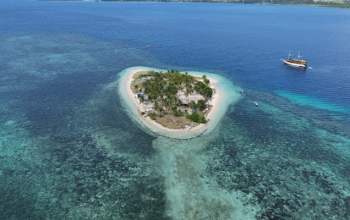
Komodo Tour Package: Paradise Between Sumbawa and Lombok
Tucked quietly between Sumbawa and Lombok, far from the noise of the city, lies a small paradise surrounded by turquoise water — Bedil Island. Though many travelers pass through this area during their 4 Days 3 Nights Komodo boat trip with BOSE via KomodoExplore.com, few realize just how special this island really is. Bedil Island... read more
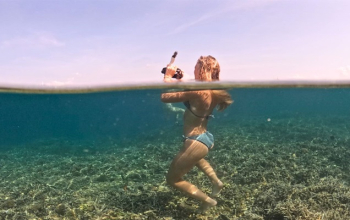
Komodo Island Tour Adventure: Sailing from Labuan Bajo 4D3N
There’s a moment, just before sunrise in Labuan Bajo, when the world feels suspended in golden silence. The harbor, the undisputed gateway to Komodo National Park, begins to hum softly,crews loading fresh water, tropical fruits, and countless stories onto the sturdy, wooden decks. The ocean glitters awake, as if whispering, “Come, it’s time for a..... read more
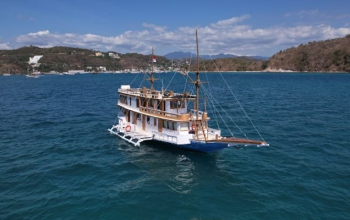
Komodo Island Tour Package 3D2N: Sailing Through Islands
Where Adventure Meets Serenity There’s something timeless about the sea, the way it whispers ancient stories and carries the scent of freedom.And nowhere does that magic feel more alive than among the islands of Komodo National Park, where dragons still roam, and sunsets still paint the sky gold. The Komodo 3D2N Tour Package by Bose... read more


Luxury Komodo Cruise 4D 3N – L...
*Start Rp 4.725.000 / Pax



Lombok Komodo Boat Tour Open Tri...
*Start Rp 6.300.000 / Pax


Komodo Luxury 4D 3N Lombok To Ko...
*Start Rp 6.750.000 / Pax









Contact Us
If you have any questions, please contact us.
-
Hotline
62851-8392-9229 -
Whatsapp
085183929229 -
Email
labuanbajobooking@gmail.com


No comment yet